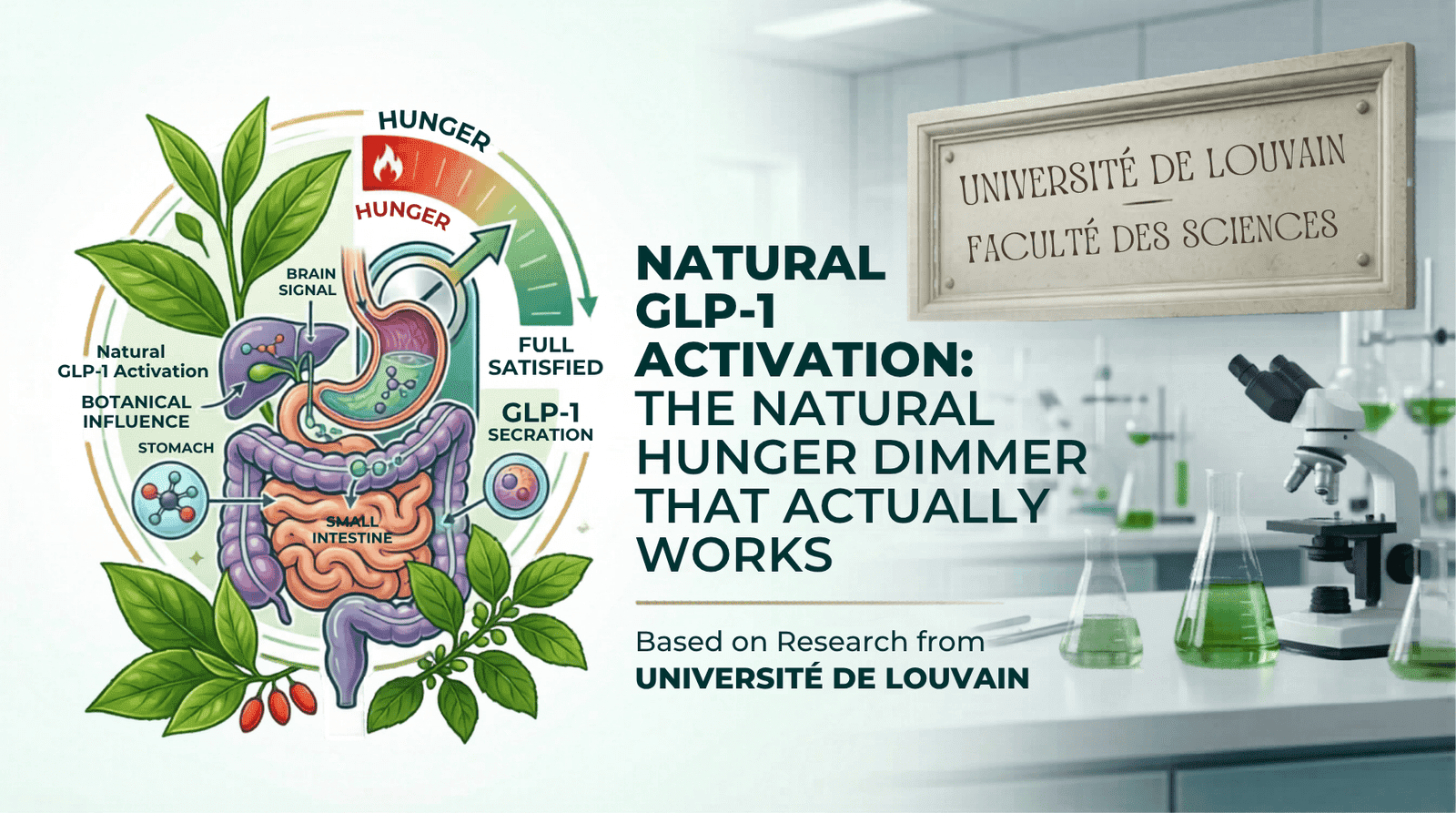
Natural GLP-1 Activation: The Hunger Dimmer That Actually Works
Université de Louvain | GLP-1 receptor expression and botanical activation (2021) | View Study (PMID: 33820962)
Written by: Nukleo Research Team | Based on peer-reviewed research | Last updated: March 26, 2026
Quick Definition
Natural GLP-1 activation refers to strategies that increase your body’s own production and function of GLP-1 (glucagon-like peptide-1) through dietary compounds and lifestyle factors, rather than synthetic drugs. This approach supports natural satiety signaling, metabolic coordination, and appetite regulation by optimizing the hormonal systems already present in your body.
Key Mechanisms of Natural GLP-1 Activation:
- Stimulation of intestinal L-cells to produce more GLP-1
- Support for beneficial gut bacteria (Akkermansia muciniphila)
- Protection from rapid DPP-4 enzyme degradation
- Increased GLP-1 receptor expression and sensitivity
- Enhanced postprandial glucose regulation
Complete GLP-1 Knowledge Series:
→ Natural GLP-1 Activation | L-Cells | DPP-4 Enzyme
→ GLP-1 Signaling | Postprandial Glucose | Metabolic Flexibility
The Appetite Dimmer Switch
Natural GLP-1 activation is one of the most overlooked levers in metabolic health. Every time you eat, specialized cells in your intestines—called L-cells—release a hormone that travels to your brain with a simple message: you’ve had enough. That hormone is GLP-1 (glucagon-like peptide-1), and it represents arguably the most sophisticated appetite control mechanism your body possesses.
Think of appetite like a bright light in a dark room. Most people try to control hunger through sheer willpower—essentially attempting to ignore the light while it blazes at full intensity. Natural GLP-1 activation works differently. It’s the dimmer switch that gradually reduces the brightness, making it genuinely easier to feel satisfied rather than constantly fighting the urge to eat more.
The challenge isn’t that your body lacks this system. The challenge is that modern eating patterns, processed foods, and metabolic stress have dulled its effectiveness. Your L-cells may not respond as vigorously as they should. The GLP-1 they produce gets broken down almost immediately by an enzyme called DPP-4. The signals don’t last long enough to do their job properly.
This is where natural activation becomes relevant—not as a pharmaceutical intervention, but as a way to restore what should already be working.
How Natural GLP-1 Activation Works
When your GLP-1 system functions optimally, several coordinated processes occur. The hormone binds to receptors in your hypothalamus, activating POMC neurons that signal satiety. It slows stomach emptying, extending the period you feel full after eating. It coordinates how your pancreas secretes insulin in response to rising blood sugar.
Perhaps most importantly, natural GLP-1 activation doesn’t just suppress hunger temporarily—it helps recalibrate your entire metabolic response to food. This broader metabolic coordination is what distinguishes GLP-1 function from simple appetite suppression.
The hormone serves multiple roles simultaneously: regulating appetite through direct brain signaling, moderating postprandial glucose through coordinated insulin secretion, and influencing how quickly your body shifts from using dietary glucose to accessing stored fat once immediate meal nutrients are processed.
The Research: 200% Increase in GLP-1 Production
Clinical observations of synergistic botanical blends have demonstrated support for up to a 200% increase in natural GLP-1 activation—effectively tripling the body’s satiety hormone output through targeted L-cell stimulation.
The mechanism centers on phytonutrient activation of intestinal L-cells. Research from Université de Louvain (PMID: 33820962) has mapped how specific botanical compounds interact with receptors on these specialized gut cells. When L-cells detect certain botanical signals, they respond by dramatically ramping up GLP-1 secretion.
What makes this approach compelling is its biological logic. You’re not overriding your body’s systems with a drug. You’re working with existing pathways, using nutrients to amplify signals that already exist. The 200% figure represents what’s been observed when multiple botanical compounds work in concert—a synergistic effect where the combination proves far more potent than any single ingredient alone.
The Akkermansia Connection
Part of the natural GLP-1 activation story involves the gut microbiome—particularly a bacterium called Akkermansia muciniphila. The same Université de Louvain research that documented GLP-1 activation effects also identified a relationship between gut bacteria composition and hormone production.
Akkermansia, when properly supported through diet and supplementation, appears to enhance the gut environment in ways that facilitate stronger GLP-1 signaling. The bacterium produces metabolites that interact with L-cells, potentially amplifying their responsiveness to nutritional triggers.
This represents an example of how gut health and metabolic hormones form an integrated system. The resistant starches and fibers that feed Akkermansia don’t just mechanically fill your stomach—they cultivate bacteria that chemically signal your L-cells to produce more GLP-1. It’s sophisticated biological amplification: botanical compounds activate GLP-1 production while simultaneously creating the microbial conditions that amplify and sustain that production.
Natural Activation vs. Pharmaceutical GLP-1 Drugs
GLP-1 receptor agonists like semaglutide (Ozempic, Wegovy) have captured enormous attention for their weight loss effects. These drugs introduce synthetic GLP-1 analogs that resist breakdown by DPP-4, keeping GLP-1 activity elevated for days rather than minutes.
Natural activation operates on entirely different principles. You’re not introducing a pharmaceutical compound that mimics GLP-1. You’re providing botanical nutrients that signal your own cells to produce more of the hormone they’re already designed to make.
The distinction matters because it affects everything from side effect profiles to long-term metabolic outcomes. Prescription GLP-1 drugs work by maintaining persistent, pharmacological levels of hormone activity. Natural activation works by restoring normal function that may have been compromised through diet, lifestyle, or metabolic stress.
One approach forces a metabolic state through external pharmaceutical intervention. The other supports what should be happening naturally through targeted nutritional optimization.
The Synergistic Botanical Approach
The 200% natural GLP-1 activation potential doesn’t emerge from a single ingredient. It results from carefully orchestrated combinations of botanical compounds working through complementary mechanisms—what research describes as synergistic activation.
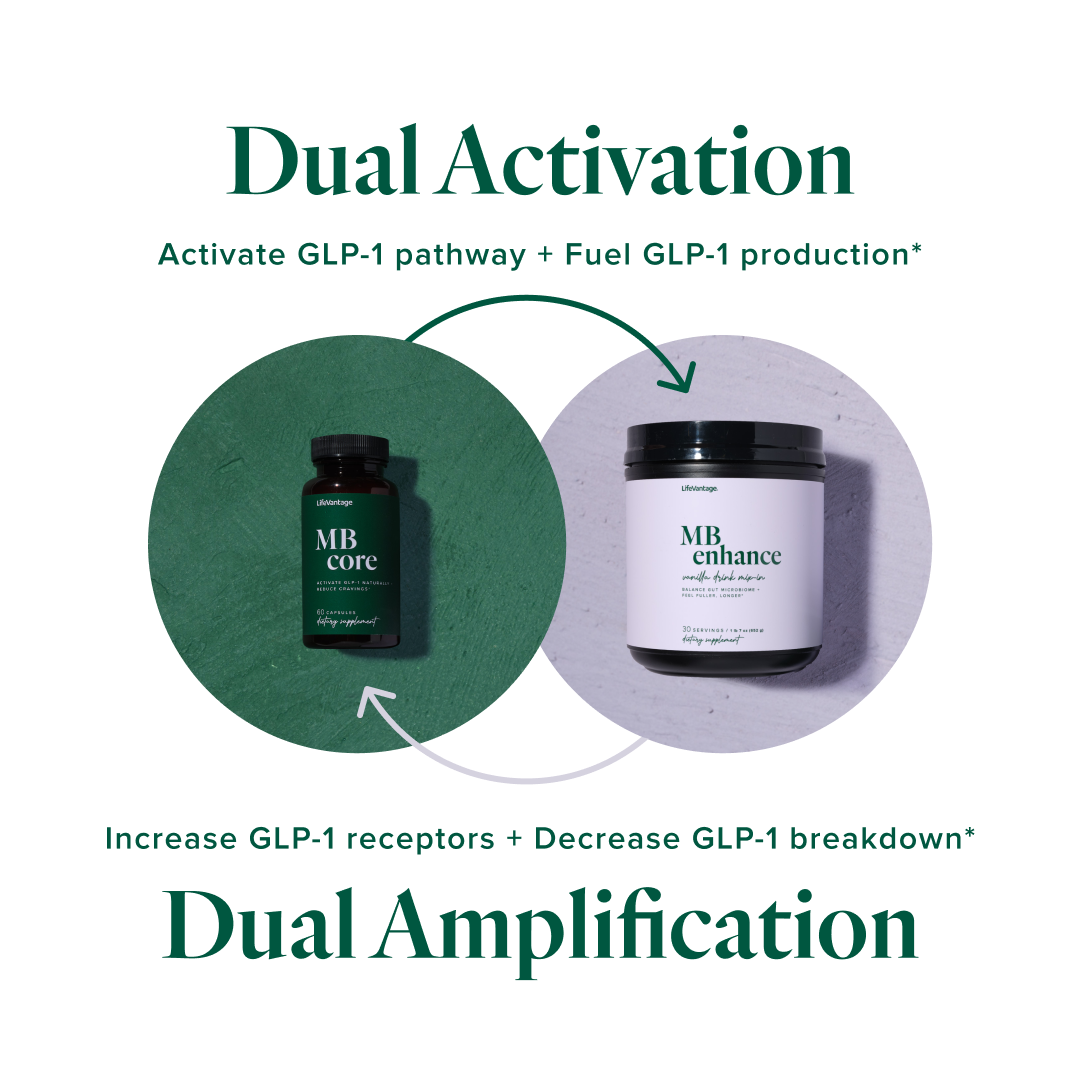
The approach operates on two levels simultaneously. The first level involves direct L-cell activation through botanical compounds. Each component contributes to GLP-1 production through distinct receptor pathways. Some activate nutrient-sensing receptors on L-cell surfaces. Others enhance the intracellular signaling cascades that lead to hormone secretion.
The second level targets the gut microbiome environment. Resistant starches—particularly potato starch and tapioca fiber—reach the lower intestine intact, where they serve as prebiotics for beneficial bacteria. These bacteria then produce metabolites that further stimulate L-cell activity.
The botanical activators work directly on L-cells while simultaneously cultivating the microbial environment that amplifies GLP-1 production. It’s a two-pronged strategy: immediate hormonal activation plus sustained microbiome support.
Protecting GLP-1 From Rapid Degradation
Increasing GLP-1 production matters little if the hormone degrades immediately. The DPP-4 enzyme breaks down active GLP-1 within 2-3 minutes of secretion, severely limiting how long the hormone can signal satiety and coordinate metabolic responses.
Clinical research has demonstrated that the same botanical blends that activate GLP-1 production also influence DPP-4 enzyme expression. In vitro studies showed a 38% reduction in DPP-4 gene expression alongside a 54% increase in GLP-1 production.
This dual action proves crucial. By simultaneously increasing GLP-1 production while supporting healthy DPP-4 balance, botanical compounds allow more of the produced hormone to survive long enough to reach target tissues and activate satiety signaling throughout the body.
Receptor Upregulation: Amplifying the Signal
The synergistic effects extend beyond hormone production and protection. Research from Université de Louvain demonstrated a 53% increase in GLP-1 receptor (GLP1R) expression with botanical intervention.
More receptors mean each GLP-1 molecule can have greater impact. You’re not just producing more hormone and protecting it from degradation—you’re also increasing your cells’ capacity to respond to it. This represents comprehensive biological optimization: enhanced production, extended duration, and amplified cellular response.
The resistant starch and fiber components create satiety through physical mechanisms while feeding beneficial gut bacteria. The botanical activators trigger multiple pathways of L-cell stimulation. The microbiome enhancement multiplies the effect. And the receptor upregulation ensures maximum biological response to each GLP-1 molecule produced.
The Metabolic Context: Beyond Appetite Suppression
GLP-1 doesn’t function in isolation as a simple “satiety hormone.” Its effects ripple through multiple systems that collectively determine your metabolic flexibility—the ability to efficiently switch between burning carbohydrates and fats for energy.
When you eat, natural GLP-1 activation helps manage the post-meal glucose spike by coordinating insulin secretion with actual nutrient availability. This prevents the excessive insulin response that can lead to reactive hypoglycemia and subsequent hunger cycles. The hormone also influences how quickly your body shifts from using dietary glucose to accessing stored fat once immediate meal nutrients are processed.
These interconnected effects explain why proper GLP-1 function impacts not just appetite but overall metabolic health. The hormone serves as a key regulatory signal coordinating multiple aspects of energy metabolism—from immediate satiety to long-term fuel utilization patterns.
Why Synergy Matters More Than Individual Ingredients
The 200% activation potential comes from strategic combination—botanical compounds working through complementary mechanisms to maximize L-cell output while simultaneously supporting GLP-1 longevity and target tissue sensitivity.
It’s not about taking more of one ingredient or finding the “magic compound” that solves everything. It’s about orchestrating multiple inputs to achieve a synergistic result that no single substance could produce independently.
This multi-pathway approach distinguishes natural GLP-1 activation from both passive dietary strategies and pharmaceutical intervention. It represents biological optimization through nutritional science—working with multiple mechanisms simultaneously to restore and enhance what should be functioning naturally.
Frequently Asked Questions About Natural GLP-1 Activation
How long does it take to see results from natural GLP-1 activation?
Most people notice appetite regulation improvements within the first week of implementing natural GLP-1 activation strategies, with more pronounced effects developing over 2-4 weeks as gut microbiome populations shift and GLP-1 receptor expression increases. However, sustained benefits require consistent implementation—this represents metabolic optimization through ongoing nutritional support rather than a temporary intervention.
Is natural GLP-1 activation as effective as prescription GLP-1 drugs?
Natural activation and pharmaceutical GLP-1 agonists work through fundamentally different mechanisms and shouldn’t be directly compared on effectiveness alone. Prescription drugs produce more dramatic appetite suppression by maintaining pharmacological hormone levels for days. Natural activation produces more modest but sustainable effects by optimizing your body’s own GLP-1 production, protection, and signaling. The appropriate choice depends on individual metabolic needs, health status, and whether restoration of natural function or pharmaceutical intervention is the goal.
Can I naturally activate GLP-1 through diet alone?
Dietary strategies can support natural GLP-1 activation to some degree. Consuming protein, healthy fats, and fiber—particularly soluble fiber that reaches the lower intestine—stimulates L-cell GLP-1 release. However, achieving the 200% activation levels observed in research typically requires concentrated botanical compounds and resistant starches in amounts difficult to obtain through whole foods alone. Diet provides the foundation, while targeted supplementation amplifies the effect.
What role does Akkermansia muciniphila play in GLP-1 activation?
Akkermansia muciniphila enhances the gut environment in ways that facilitate stronger GLP-1 signaling. This beneficial bacterium produces metabolites that interact directly with L-cells, amplifying their responsiveness to nutritional triggers. Supporting Akkermansia through resistant starches and specific fibers creates a biological amplification loop: the bacteria feed on these compounds and produce signals that enhance GLP-1 production, while the improved GLP-1 function supports overall metabolic health that further benefits the gut microbiome.
Are there side effects from natural GLP-1 activation?
Natural GLP-1 activation through botanical compounds and resistant starches typically produces minimal side effects since you’re working with your body’s existing pathways rather than introducing synthetic hormone analogs. Some people may experience mild digestive adjustment during the first few days as gut bacteria populations shift, particularly increased gas or changes in bowel movements. These effects usually resolve within a week as the microbiome adapts. Unlike pharmaceutical GLP-1 drugs, natural activation doesn’t produce the nausea, vomiting, or gastroparesis that can occur with pharmacological hormone levels.
Explore the Complete GLP-1 Series:
→ Natural GLP-1 Activation | L-Cells | DPP-4 Enzyme
→ GLP-1 Signaling | Postprandial Glucose | Metabolic Flexibility
Natural GLP-1 Activation
200% GLP-1 Increase in 12-Week Clinical Study*
- ✓ Activates intestinal L-cells for natural GLP-1 production
- ✓ Supports GLP-1 receptor expression (53% increase)*
- ✓ Promotes healthy DPP-4 enzyme balance (38% reduction)*
- ✓ 100% of weight loss from fat tissue*
- ✓ 6% increase in skeletal muscle mass*
* Disclaimer: These statements have not been evaluated by the Food and Drug Administration. This product is not intended to diagnose, treat, cure, or prevent any disease.
* Medical Disclaimer: The content on Nukleo.bio is for informational purposes only and is not intended as medical advice, diagnosis, or treatment. Always consult a qualified healthcare provider before making changes to your health regimen.