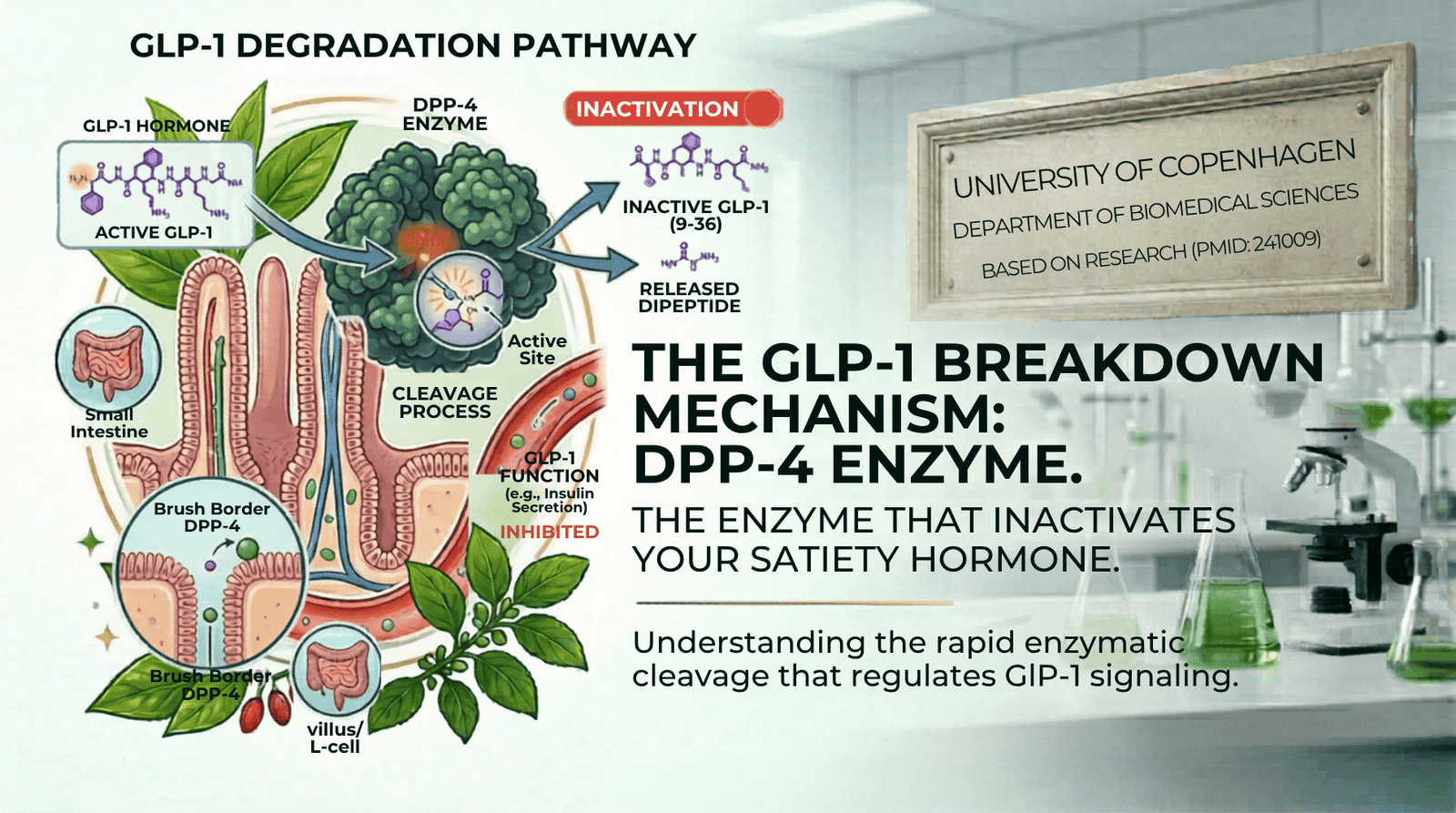
DPP-4 Enzyme: The GLP-1 Breakdown Mechanism
Research: Dong JX, et al. | Vrije Universiteit Amsterdam | Nrf2 activation and enzyme regulation (2011) | View Study (PMID: 21967611)
Written by: Nukleo Research Team | Based on peer-reviewed research | Last updated: March 26, 2026
What is DPP-4 Enzyme?
The DPP-4 enzyme (dipeptidyl peptidase-4) rapidly degrades active GLP-1 hormone, reducing its circulating half-life to just 2-3 minutes. This enzyme acts as the primary limiting factor in how long GLP-1 can activate its receptors and generate metabolic signals throughout your body.
Key Effects:
- Breaks down active GLP-1 within 2-3 minutes of secretion
- Limits how long GLP-1 can signal satiety and metabolic coordination
- Also degrades other incretin hormones like GIP
- Present throughout the body (bloodstream, kidneys, intestines)
- Can be influenced by botanical compounds and lifestyle factors
Complete GLP-1 Knowledge Series:
→ Natural GLP-1 Activation | L-Cells | DPP-4 Enzyme
→ GLP-1 Signaling | Postprandial Glucose | Metabolic Flexibility
The GLP-1 Eraser
Every time you eat, specialized cells in your intestines—called L-cells—release GLP-1 to signal fullness and coordinate your metabolic response to food. But there’s a catch. Almost immediately after secretion, the DPP-4 enzyme begins breaking down that GLP-1, degrading the active hormone within just 2-3 minutes.
Think of this enzyme as the eraser that removes the message before it can be fully read. Your body produces the satiety signal, but the DPP-4 enzyme erases it so quickly that it barely has time to reach all its intended targets. This is why the half-life of naturally produced GLP-1 is measured in minutes rather than hours.
The challenge isn’t that your body lacks this system. The challenge is that the DPP-4 enzyme works so efficiently that even robust GLP-1 production gets neutralized almost immediately. Your L-cells may produce plenty of hormone, but if this enzyme degrades it within minutes, the signals don’t last long enough to do their job properly.
This is where understanding how the DPP-4 enzyme functions becomes relevant—not as a pharmaceutical intervention, but as a way to optimize what should already be working.
How the DPP-4 Enzyme Works
The DPP-4 enzyme is a serine protease that cleaves peptide bonds in proteins. Specifically, it removes dipeptides (two amino acids) from the N-terminal end of proteins that have either proline or alanine in the second position. GLP-1 happens to have this exact molecular structure, making it a prime target for degradation.
This enzyme exists in two forms: a membrane-bound version on cell surfaces and a soluble form circulating in the bloodstream. Both forms actively degrade GLP-1, but the soluble circulating form is primarily responsible for the rapid breakdown of GLP-1 as it travels from L-cells in your intestines to target tissues like the brain and pancreas.
This degradation happens continuously. As soon as GLP-1 enters circulation, the DPP-4 enzyme begins cleaving it. Within 1-2 minutes, roughly half of the active GLP-1 has been inactivated. Within 2-3 minutes, the vast majority is gone. The hormone that’s supposed to coordinate your metabolic response to a meal exists in active form for only a fraction of the time you spend digesting that meal.
Why Rapid Degradation Matters
The 2-3 minute half-life of GLP-1 created by DPP-4 enzyme activity creates a fundamental challenge for metabolic health. The hormone needs to perform multiple coordinated functions: signal satiety to the brain, enhance insulin secretion from the pancreas, slow gastric emptying, suppress glucagon release, and influence how quickly your body shifts from using dietary glucose to accessing stored fat.
These processes unfold over different timescales. Brain satiety signaling can occur relatively quickly once GLP-1 reaches hypothalamic receptors. But coordinating insulin secretion with actual nutrient absorption, moderating gastric emptying to prevent glucose spikes, and supporting the metabolic transition to fat burning all require sustained GLP-1 activity over the course of hours, not minutes.
When the enzyme rapidly degrades GLP-1, you lose much of this sustained coordination. You might get some initial satiety signaling, but not enough to prevent renewed hunger before your next meal. The metabolic coordination that GLP-1 is designed to provide gets truncated before it can fully execute.
The Pharmaceutical Response: DPP-4 Inhibitors
The pharmaceutical industry recognized this limitation and developed DPP-4 inhibitor drugs—medications like sitagliptin (Januvia), saxagliptin (Onglyza), and linagliptin (Tradjenta). These drugs block the DPP-4 enzyme, allowing naturally produced GLP-1 to survive longer and exert greater metabolic effects.
These inhibitors represent a more conservative pharmaceutical approach compared to GLP-1 receptor agonists like semaglutide (Ozempic). Rather than introducing synthetic GLP-1 analogs, these drugs simply protect your body’s own GLP-1 from rapid degradation. The result is more modest but also more physiologic—you’re enhancing natural function rather than overriding it with pharmacological hormone levels.
However, even this more conservative pharmaceutical approach comes with considerations. Complete inhibition affects multiple peptides beyond just GLP-1, potentially disrupting other physiological processes. The body produces this enzyme for reasons beyond simply degrading incretins—it plays roles in immune function, inflammation, and other biological processes.
Natural Strategies for Supporting Healthy Balance
Research suggests that certain botanical compounds may support a healthier balance between GLP-1 production and DPP-4 enzyme degradation without completely blocking enzyme activity. This represents a middle ground between doing nothing and pharmaceutical inhibition.
Green tea extracts, particularly compounds like epigallocatechin gallate (EGCG), have demonstrated modest modulating effects in research. These compounds don’t completely block the enzyme but may slow activity enough to extend GLP-1’s active window from 2-3 minutes to 4-6 minutes—a doubling of half-life that can significantly enhance metabolic coordination.
Berberine, a compound found in several plants including goldenseal and barberry, has shown similar effects. Research indicates it may influence expression and activity through multiple pathways, potentially reducing how much your body produces while also directly moderating its activity.
The strategy isn’t to eliminate function entirely but to optimize the balance. Your body still produces and secretes the enzyme, but at levels that allow GLP-1 to survive long enough to execute its coordinated metabolic functions while maintaining the eventual degradation that prevents excessive hormone accumulation.
The Synergistic Approach: Production Plus Protection
Understanding the DPP-4 enzyme’s role reveals why effective natural GLP-1 activation requires a two-pronged strategy. Increasing GLP-1 production through botanical L-cell activation provides little benefit if all that additional hormone gets immediately degraded. Conversely, protecting GLP-1 from degradation offers limited help if production remains low.
The most effective approaches combine both mechanisms. Botanical compounds that stimulate L-cell GLP-1 production work synergistically with compounds that support healthy DPP-4 enzyme balance. You simultaneously increase the hormone signal and extend how long that signal remains active—amplifying both the magnitude and duration of GLP-1’s metabolic effects.
This explains why research showing 200% increases in GLP-1 activity typically involves multi-component formulations rather than single ingredients. The combination addresses both production and protection, creating a multiplicative effect where the whole proves far greater than the sum of individual parts.
Beyond GLP-1: Other Hormones Affected
While much focus on the DPP-4 enzyme centers on its degradation of GLP-1, this enzyme affects multiple aspects of metabolic health. It also degrades GIP (glucose-dependent insulinotropic polypeptide), another incretin hormone that coordinates insulin secretion with nutrient absorption. It influences various chemokines and neuropeptides involved in inflammation, immune function, and metabolic regulation.
This broader role means that complete inhibition—whether pharmaceutical or through excessive supplementation—could potentially disrupt processes beyond incretin function. The body produces enzymes for multiple purposes, and blocking them entirely can create unintended consequences even when the primary effect (GLP-1 protection) is desirable.
This is why moderate, balanced approaches that support optimal function rather than complete inhibition may offer better long-term outcomes. The goal isn’t to eliminate the enzyme but to ensure it doesn’t degrade GLP-1 so rapidly that the hormone can’t execute its metabolic coordination functions effectively.
Frequently Asked Questions About DPP-4 Enzyme
What foods or supplements can help manage the DPP-4 enzyme naturally?
Green tea extracts (particularly EGCG), berberine, and certain polyphenols from foods like cinnamon and turmeric have demonstrated modest modulating effects in research. These compounds don’t completely block the DPP-4 enzyme but may slow its activity enough to extend GLP-1’s half-life from 2-3 minutes to 4-6 minutes. Protein-rich meals and healthy fats also appear to influence enzyme activity indirectly.
How do DPP-4 enzyme inhibitor drugs differ from GLP-1 drugs like Ozempic?
DPP-4 enzyme inhibitors (like Januvia) work by protecting your body’s naturally produced GLP-1 from rapid degradation, allowing it to survive longer and exert greater effects. GLP-1 receptor agonists (like Ozempic) introduce synthetic GLP-1 analogs that resist degradation entirely. Inhibitors produce more modest effects by enhancing natural function, while agonists create dramatic effects through pharmaceutical hormone replacement.
Is it better to increase GLP-1 production or reduce DPP-4 enzyme activity?
The most effective approach combines both strategies. Increasing GLP-1 production without managing the DPP-4 enzyme means the additional hormone gets rapidly broken down before it can exert full effects. Conversely, reducing enzyme activity without increasing production provides limited benefit if baseline GLP-1 levels are low. Synergistic strategies that simultaneously enhance production and extend hormone half-life create multiplicative effects.
Does the DPP-4 enzyme affect other hormones besides GLP-1?
Yes. The DPP-4 enzyme degrades multiple peptide hormones including GIP (another incretin hormone), various chemokines involved in inflammation, and neuropeptides that influence immune function. This is why complete inhibition—whether pharmaceutical or through excessive supplementation—could potentially affect processes beyond incretin metabolism. Moderate approaches that support optimal balance may offer better long-term outcomes.
Explore the Complete GLP-1 Series:
→ Natural GLP-1 Activation | L-Cells | DPP-4 Enzyme
→ GLP-1 Signaling | Postprandial Glucose | Metabolic Flexibility
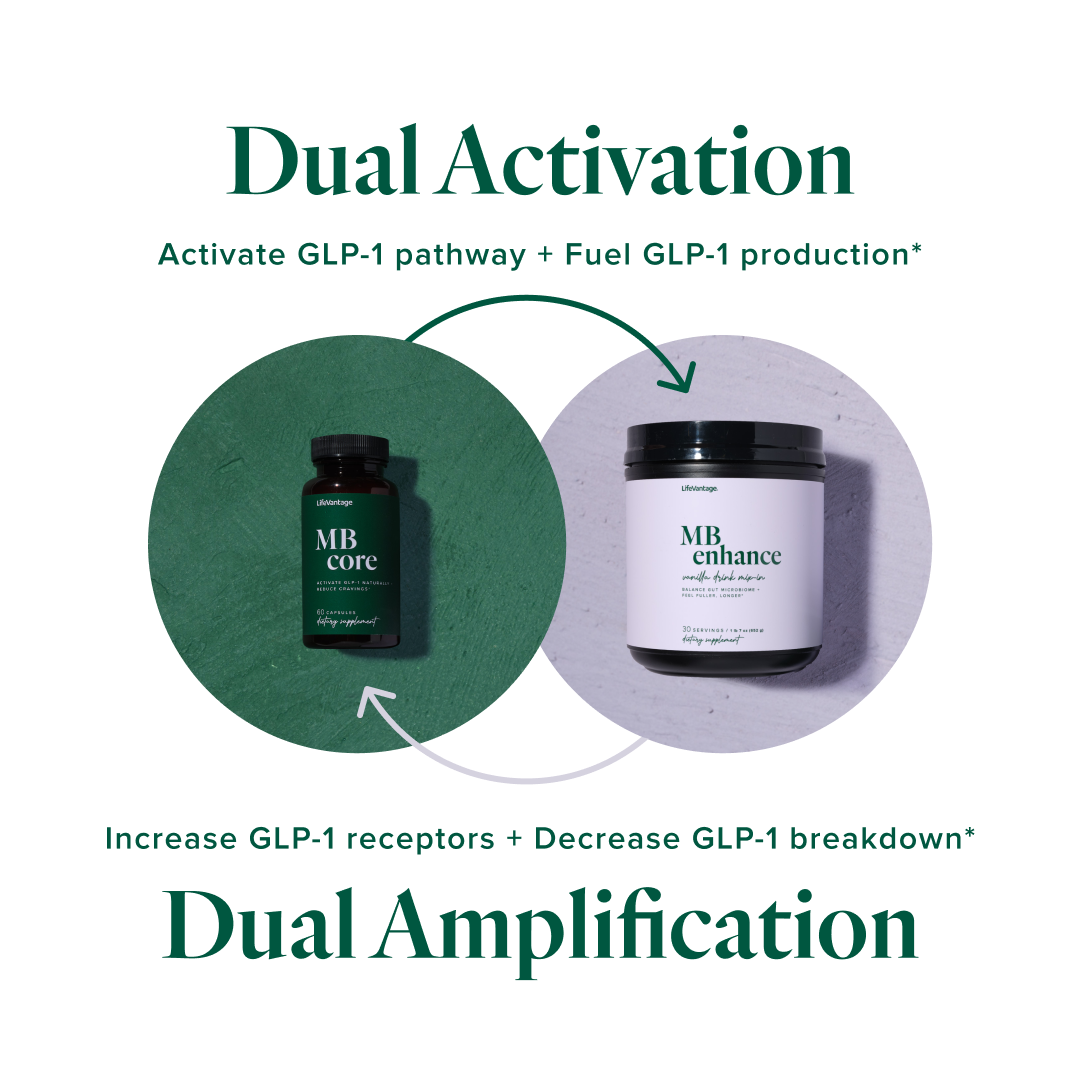
Protect Your GLP-1 From Rapid Degradation
Botanical Support for Healthy DPP-4 Enzyme Balance*
- ✓ Supports healthy DPP-4 enzyme balance (38% reduction)*
- ✓ Extends active GLP-1 half-life for sustained signaling*
- ✓ Combines production boost + degradation protection*
- ✓ Synergistic botanical formula (not single-ingredient approach)
- ✓ Natural alternative to pharmaceutical DPP-4 inhibitors*
* Disclaimer: These statements have not been evaluated by the Food and Drug Administration. This product is not intended to diagnose, treat, cure, or prevent any disease.
* Medical Disclaimer: The content on Nukleo.bio is for informational purposes only and is not intended as medical advice, diagnosis, or treatment. Always consult a qualified healthcare provider before making changes to your health regimen.