GLP-1 Signaling: The Metabolic Communication Network
Research: Mithieux G, et al. | Université de Louvain | GLP-1 receptor expression and botanical activation (2021) | View Study (PMID: 33820962)
Written by: Nukleo Research Team | Based on peer-reviewed research | Last updated: March 26, 2026
What is GLP-1 Signaling?
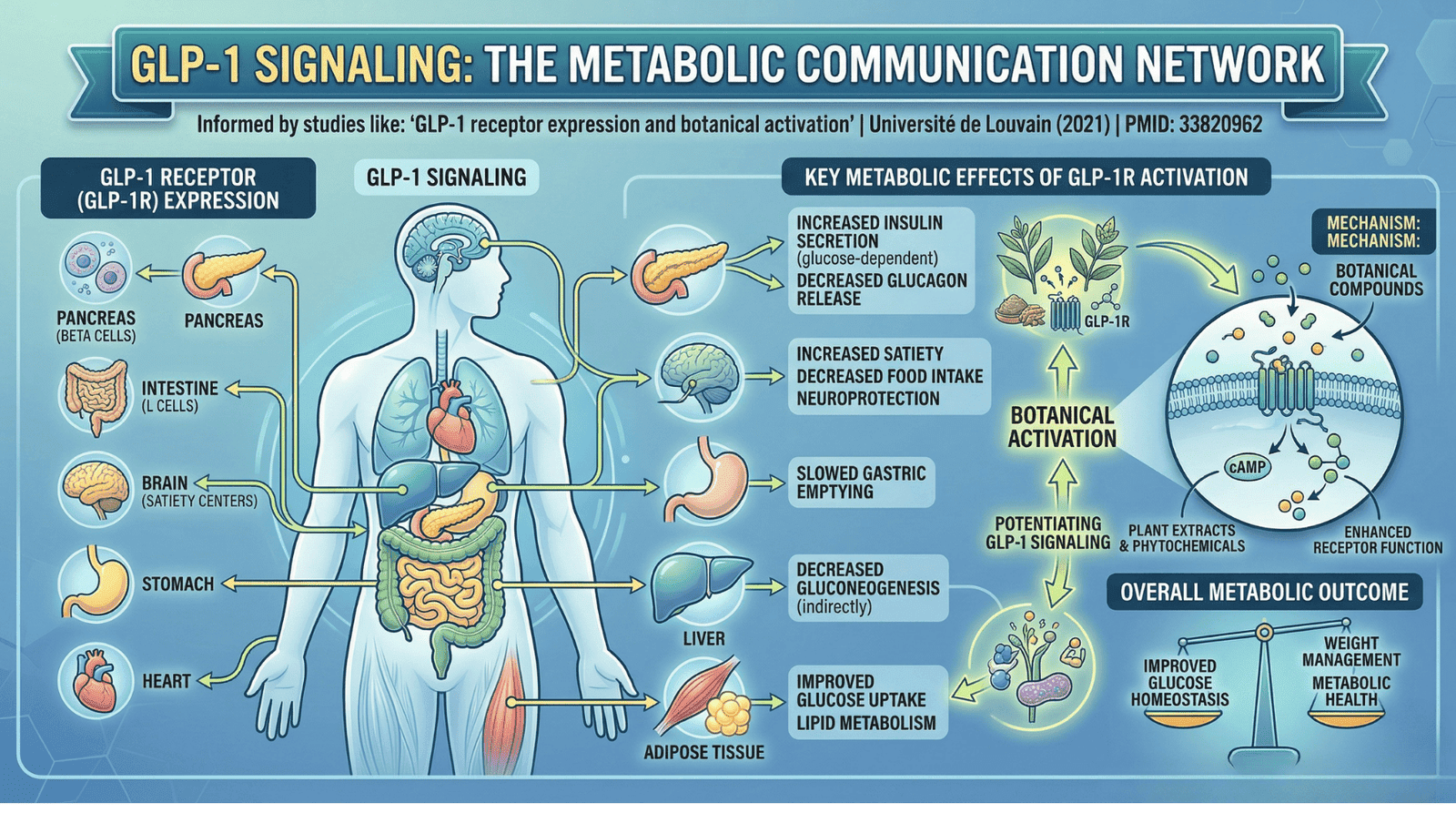
GLP-1 signaling is the cellular communication process activated when GLP-1 hormone binds to receptors throughout your body, coordinating appetite suppression, insulin secretion, and glucose metabolism across multiple organs including the brain, pancreas, and stomach.
Key Effects:
- Enhanced insulin secretion (pancreas)
- Reduced appetite and increased satiety (brain)
- Slowed gastric emptying (stomach)
- Suppressed glucagon release (pancreas)
- Improved glucose-dependent regulation
Complete GLP-1 Knowledge Series:
→ Natural GLP-1 Activation | L-Cells | DPP-4 Enzyme
→ GLP-1 Signaling | Postprandial Glucose | Metabolic Flexibility
The Metabolic Messenger System: Understanding GLP-1 Signaling
Your body operates through an intricate communication network where hormones serve as messengers, traveling from one location to trigger specific responses elsewhere. This signaling represents one of the most sophisticated channels in this network—a direct line from your gut to multiple organs orchestrating coordinated metabolic responses.
Think of the GLP-1 system like a company-wide email network. When GLP-1 binds to its receptors, it doesn’t just send one message to one department. It broadcasts coordinated instructions to your brain (appetite control), pancreas (insulin secretion), stomach (motility regulation), and liver (glucose production). This synchronized communication is what makes GLP-1 such a powerful metabolic regulator.
The system’s elegance lies in its specificity. These pathways only activate when GLP-1 molecules bind to GLP-1 receptors—specialized proteins embedded in cell membranes throughout your body. No receptor activation means no signal transmission, which is precisely why the rapid degradation by DPP-4 enzyme matters so much for metabolic function.
How GLP-1 Receptor Activation Works at the Cellular Level
The process begins when the hormone encounters a GLP-1 receptor (GLP1R) on a target cell’s surface. These receptors belong to the G-protein coupled receptor family—a class of proteins that span the cell membrane and trigger internal responses when activated by external signals.
When GLP-1 binds to its receptor, the receptor changes shape. This conformational shift activates G-proteins inside the cell, which then trigger a cascade of molecular events. The primary pathway increases cyclic AMP (cAMP), a molecule that serves as a secondary messenger amplifying the original GLP-1 signal throughout the cell.
This amplification matters tremendously. A single GLP-1 molecule binding to one receptor can generate hundreds of cAMP molecules, each triggering additional downstream effects. It’s molecular multiplication—taking a small initial signal and magnifying it into substantial cellular changes.
In your brain’s hypothalamus, this signaling activates neurons that promote satiety while simultaneously inhibiting neurons that stimulate appetite. This dual action creates the robust appetite suppression GLP-1 is known for. In pancreatic beta cells, the same cAMP pathway enhances glucose-stimulated insulin secretion.
Research from Université de Louvain (PMID: 33820962) demonstrated that botanical compounds can influence receptor expression itself. The study showed a 53% increase in GLP-1 receptor expression alongside increased hormone production, effectively amplifying both the signal and the cellular capacity to receive it.
GLP-1 Signaling and Metabolic Coordination
What makes this communication network particularly powerful is its presence across multiple organ systems, each responding differently to the same hormone signal. This coordinated multi-organ response is what allows GLP-1 to orchestrate complex metabolic changes from a single hormonal message.
In your brain, the system modulates appetite and satiety centers. In the pancreas, it enhances insulin secretion while suppressing glucagon release. In the stomach, it slows gastric emptying to moderate nutrient absorption. This simultaneous coordination across tissues creates metabolic effects greater than any single-organ response could achieve.
The relationship between GLP-1 receptor activation and metabolic flexibility operates bidirectionally. Proper hormonal signaling supports metabolic flexibility by coordinating how your body processes incoming nutrients and accesses stored energy.
Understanding these pathways reveals why this system represents such a promising target for metabolic health optimization. The hormone’s effects span multiple organs, its actions are glucose-dependent, and the signaling can be enhanced through multiple complementary mechanisms including increased production, extended hormone half-life, and increased receptor expression.
Frequently Asked Questions About GLP-1 Signaling
How can I increase GLP-1 signaling naturally?
Natural GLP-1 activation occurs through dietary strategies that stimulate L-cells in your intestine. Consuming protein, healthy fats, and fiber—particularly soluble fiber that reaches the lower intestine—triggers GLP-1 release. Time-restricted eating creates fasting periods that enhance receptor sensitivity, while certain botanical compounds have demonstrated the ability to increase both hormone production and receptor expression.
What is the difference between GLP-1 signaling and GLP-1 levels?
GLP-1 levels refer to the amount of the hormone circulating in your bloodstream, while GLP-1 signaling describes how effectively that hormone activates cellular responses through receptors. You can have adequate hormone levels but poor signaling if receptor expression is low or receptor sensitivity is impaired. Optimal metabolic function requires both sufficient hormone production and robust receptor-mediated signaling.
How does DPP-4 enzyme affect GLP-1 signaling?
DPP-4 enzyme rapidly degrades active GLP-1, reducing its circulating half-life to just 2-3 minutes. This rapid breakdown limits how long GLP-1 can activate its receptors and generate metabolic signals. Supporting natural GLP-1 function involves both increasing production (through diet and lifestyle) and managing degradation to extend the hormone’s active signaling window.
Can GLP-1 signaling improve without supplements?
Absolutely. Dietary composition, meal timing, exercise, and sleep quality all significantly influence this metabolic pathway. Prioritizing protein and fiber, implementing time-restricted eating, engaging in regular physical activity, and optimizing sleep enhance both GLP-1 production and receptor sensitivity through natural physiological mechanisms.
Explore the Complete GLP-1 Series:
→ Natural GLP-1 Activation | L-Cells | DPP-4 Enzyme
→ GLP-1 Signaling | Postprandial Glucose | Metabolic Flexibility
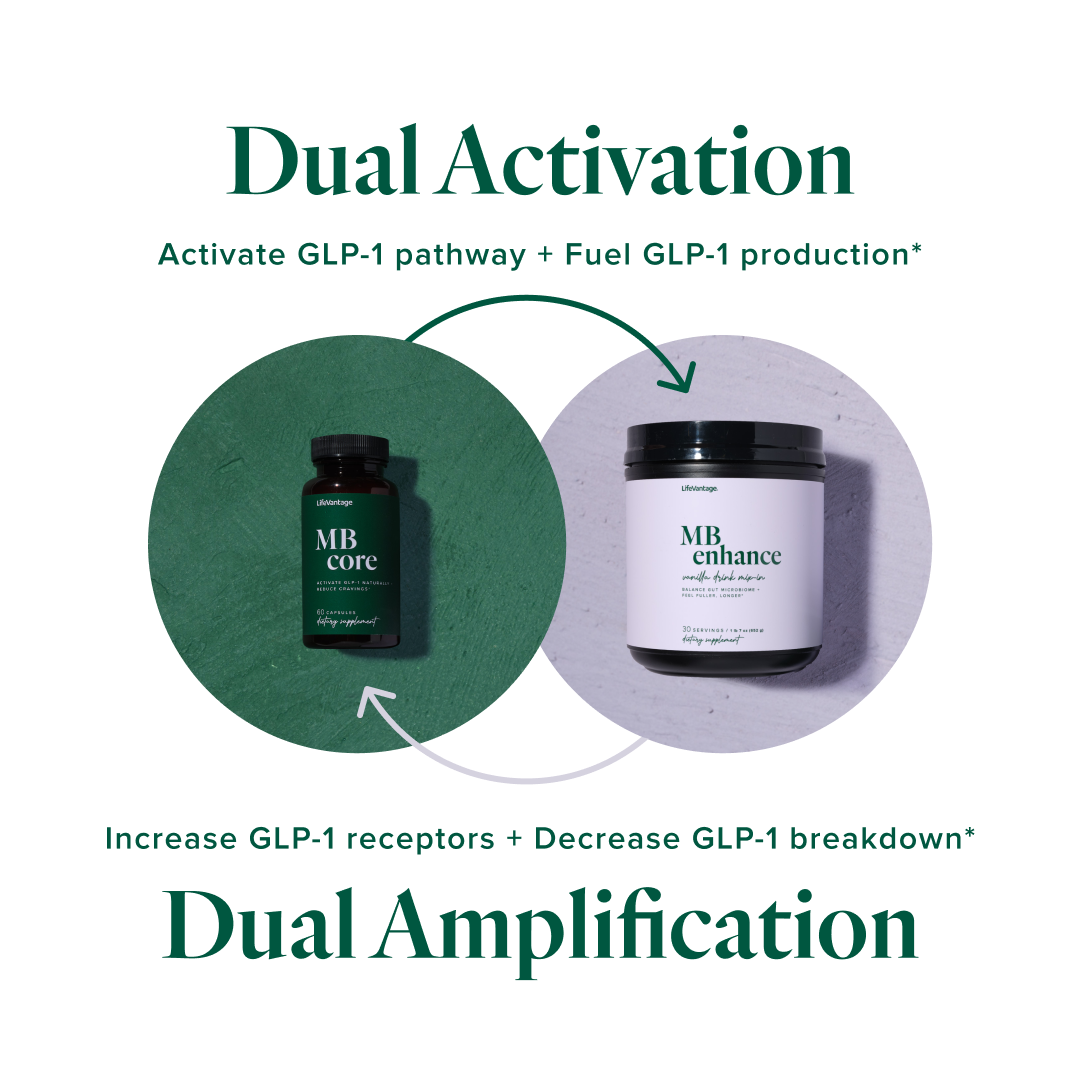
Amplify Your GLP-1 Receptor Signaling
53% Increase in GLP-1 Receptor Expression*
- ✓ Enhances GLP-1 receptor expression (53% increase)*
- ✓ Amplifies cellular response to natural GLP-1 production*
- ✓ Supports multi-organ metabolic coordination (brain, pancreas, gut)*
- ✓ Extends hormone half-life for sustained signaling*
- ✓ Botanical activation + receptor upregulation synergy*
* Disclaimer: These statements have not been evaluated by the Food and Drug Administration. This product is not intended to diagnose, treat, cure, or prevent any disease.
* Medical Disclaimer: The content on Nukleo.bio is for informational purposes only and is not intended as medical advice, diagnosis, or treatment. Always consult a qualified healthcare provider before making changes to your health regimen.