The Incredible Power of L-Cells: The Hormone Factories of Your Gut
Research: Mithieux G, et al. | Université de Louvain | Gut endocrine cells and GLP-1 production (2021) | View Study (PMID: 33820962)
Written by: Nukleo Research Team | Based on peer-reviewed research | Last updated: March 26, 2026
What are L-Cells?
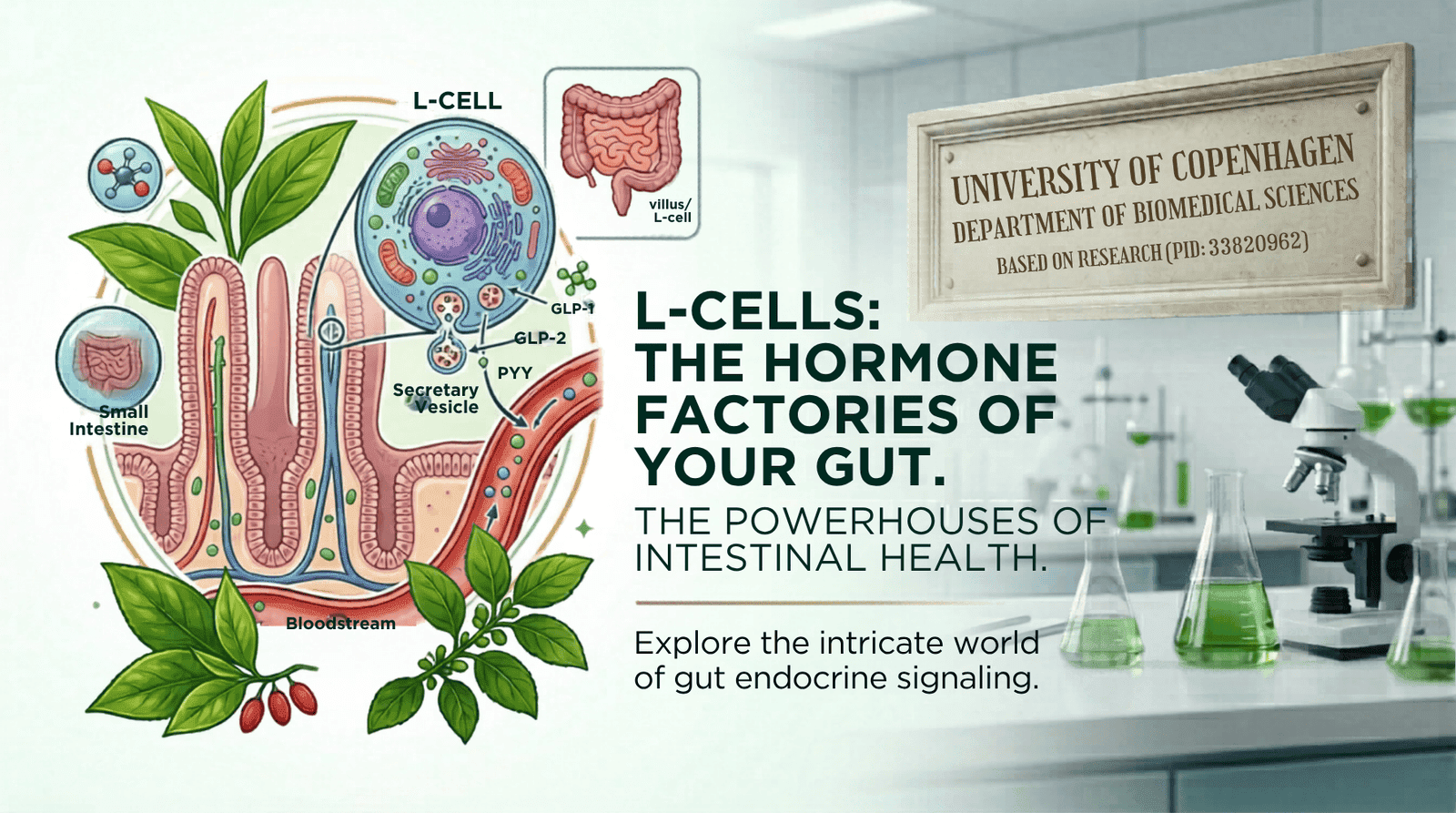
L-cells are specialized endocrine cells scattered throughout your intestinal lining that produce GLP-1 and other metabolic hormones in response to food. These hormone factories detect nutrients through surface receptors and translate what you eat into satiety signals your brain understands.
Key L-Cell Functions:
- Produce GLP-1 in response to protein, fats, and fiber
- Secrete PYY and oxyntomodulin for appetite regulation
- Respond to gut bacteria metabolites (butyrate, propionate)
- Highest concentration in the ileum and colon
- Can increase hormone output up to 200% with botanical activation
Complete GLP-1 Knowledge Series:
→ Natural GLP-1 Activation | L-Cells | DPP-4 Enzyme
→ GLP-1 Signaling | Postprandial Glucose | Metabolic Flexibility
Your Intestinal Hormone Factories
Every time you eat, specialized cells scattered throughout your lower intestines spring into action. These aren’t digestive cells breaking down food. They’re endocrine cells producing hormones—specifically, the appetite-regulating hormone GLP-1.
Think of L-cells as hormone factories embedded directly in your gut lining. While most people associate hormone production with glands like the thyroid or pancreas, your intestines contain more hormone-producing tissue than any other organ system. L-cells represent one of the most metabolically significant cell types in this distributed endocrine network.
The name “L-cell” comes from their original discovery in the lower (L for “lower”) intestine, though we now know they exist throughout the gut with highest concentrations in the ileum and colon—the final segments where nutrient absorption completes.
How L-Cells Detect What You Eat
L-cells don’t produce hormones randomly. They respond to specific nutritional signals, functioning as sophisticated nutrient sensors that translate what you eat into hormonal messages your brain can understand.
When food reaches your lower intestine, L-cells detect it through specialized receptors on their surface. Different nutrients activate different receptors. Proteins trigger one set of pathways. Fats activate another. Certain fibers and resistant starches engage mechanisms that proteins and fats don’t touch.
This is why meal composition matters for satiety. A meal rich in protein, healthy fats, and fiber activates more L-cell receptors than refined carbohydrates alone. More receptor activation means more GLP-1 secretion. More GLP-1 means stronger fullness signals reaching your brain.
The 200% Activation Discovery
Research from Université de Louvain (PMID: 33820962) documented something remarkable about L-cells and botanical compounds. When exposed to specific phytonutrient combinations, L-cells increased GLP-1 production by up to 200%—effectively tripling their hormone output.
These botanical activators work by engaging the same nutrient-sensing receptors that respond to food, but with greater intensity. It’s not about tricking your L-cells. It’s about providing the precise nutritional signals that maximize their natural responsiveness.
The mechanism centers on receptor activation. L-cells have multiple types of G-protein coupled receptors on their surface. When specific botanical compounds bind to these receptors, they trigger intracellular signaling cascades that culminate in hormone secretion. The right combination of compounds can activate multiple receptor types simultaneously, creating a synergistic effect far exceeding what any single nutrient could achieve.
Why L-Cells Do More Than You Think
L-cells produce more than just GLP-1. They secrete an entire suite of metabolic hormones including PYY (peptide YY), oxyntomodulin, and GLP-2. Together, these hormones coordinate multiple aspects of digestive and metabolic function.
GLP-1 signaling slows stomach emptying and communicates satiety to your brain. PYY reduces appetite and decreases food intake through complementary pathways. Oxyntomodulin enhances both effects while also influencing energy expenditure. GLP-2 supports intestinal barrier health and optimizes nutrient absorption.
When L-cells function optimally, this entire hormonal system works in your favor. You feel satisfied after appropriate portions. Your body properly regulates post-meal glucose responses. Your intestinal lining maintains its integrity. These aren’t separate benefits—they’re the integrated result of healthy L-cell activity.
What Dulls L-Cell Responsiveness
The challenge is that modern eating patterns can reduce L-cell responsiveness over time. Frequent snacking means L-cells never fully reset between meals. Processed foods lack the fiber and resistant starches that most effectively trigger L-cell activation. High-sugar diets can lead to a form of receptor desensitization where L-cells become less reactive to normal nutritional signals.
Your L-cells still exist. They’re still capable of producing hormones. But they’ve become less responsive to the foods you eat. It’s like a factory running at 30% capacity when it should be operating at full output.
This is where understanding L-cell biology becomes practical. If you know what activates these cells most effectively, you can make dietary and supplementation choices that restore their responsiveness rather than continuing to dull it.
The Microbiome Connection
L-cells don’t function in isolation. They’re profoundly influenced by the gut microbiome—the trillions of bacteria residing in your intestines. Certain beneficial bacteria produce metabolites that directly stimulate L-cell hormone production.
When you consume resistant starches and specific fibers, these compounds reach your lower intestine intact. Bacteria there ferment them into short-chain fatty acids like butyrate and propionate. These metabolites bind to receptors on L-cells, triggering additional GLP-1 secretion beyond what the original fiber itself accomplished.
This creates a multiplier effect. The fiber mechanically fills your stomach while also feeding bacteria that chemically signal your L-cells to produce more satiety hormones. It’s a two-step activation process: direct nutrient sensing plus microbial metabolite signaling.
The same Université de Louvain research that documented the 200% activation effect also identified Akkermansia muciniphila as a key player in this process. This specific bacterial species, when properly supported through resistant starch consumption, amplifies L-cell GLP-1 production significantly.
Restoring L-Cell Function Naturally
The strategy for optimizing L-cell activity involves three complementary approaches working simultaneously.
First, consume foods that directly activate L-cell receptors. Protein, healthy fats, and fiber-rich vegetables all trigger hormone production through different mechanisms. The diversity matters—activating multiple receptor types creates stronger overall signaling than relying on a single pathway.
Second, support the gut bacteria that enhance L-cell function. Resistant starches from sources like cooked and cooled potatoes, green bananas, or supplemental potato starch feed the specific bacteria that produce L-cell-stimulating metabolites.
Third, consider botanical compounds that research has shown to amplify L-cell responsiveness. The 200% activation observed in clinical studies came from specific phytonutrient combinations working through receptor pathways that typical foods don’t fully engage.
This isn’t about choosing one approach. The synergy comes from addressing L-cell function through multiple mechanisms simultaneously—direct nutritional activation, microbiome enhancement, and botanical amplification.
Why This Matters for Appetite Control
When your L-cells produce adequate GLP-1 and related hormones, appetite regulation becomes significantly easier. You’re not relying on willpower to override persistent hunger signals. You’re working with your body’s existing satiety mechanisms, simply ensuring they function as robustly as they’re designed to.
The difference between poorly functioning L-cells and optimally active ones isn’t subtle. It’s the difference between constantly fighting hunger between meals versus genuinely feeling satisfied for hours after eating. It’s the difference between obsessing about your next meal versus food becoming appropriately less central to your thoughts.
Your L-cells already know how to regulate your appetite. The question is whether you’re providing the nutritional environment that allows them to do their job effectively.
Frequently Asked Questions About L-Cells
Where are L-cells located in the body?
L-cells are distributed throughout the intestinal tract, with highest concentrations in the ileum (lower small intestine) and colon. These locations make sense functionally—by the time food reaches these areas, it has been partially digested, allowing L-cells to assess the full nutrient profile and produce appropriate hormonal responses based on what you’ve eaten.
What foods activate L-cells most effectively?
L-cells respond most robustly to protein, healthy fats, and fiber—particularly soluble fiber and resistant starches that reach the lower intestine intact. Meals combining these macronutrients activate multiple L-cell receptor types simultaneously, producing stronger GLP-1 secretion than meals based primarily on refined carbohydrates. Gut bacteria metabolites from fermented fiber further amplify L-cell activation.
Can L-cell function be restored if it’s been compromised?
Yes. L-cells retain their capacity to respond to nutritional signals even after periods of poor dietary patterns. Shifting to meals rich in protein, healthy fats, and fiber while supporting beneficial gut bacteria through resistant starches can restore L-cell responsiveness within weeks. Botanical compounds that activate L-cell receptors may accelerate this restoration by providing concentrated nutritional signals.
How do L-cells relate to the gut microbiome?
L-cells and gut bacteria work synergistically. Beneficial bacteria like Akkermansia muciniphila ferment resistant starches and fibers into short-chain fatty acids (butyrate, propionate) that bind to receptors on L-cells, triggering additional GLP-1 production. This creates a multiplier effect where dietary fiber both directly activates L-cells and feeds bacteria that produce metabolites amplifying L-cell hormone output.
Explore the Complete GLP-1 Series:
→ Natural GLP-1 Activation | L-Cells | DPP-4 Enzyme
→ GLP-1 Signaling | Postprandial Glucose | Metabolic Flexibility
Activate Your Intestinal Hormone Factories
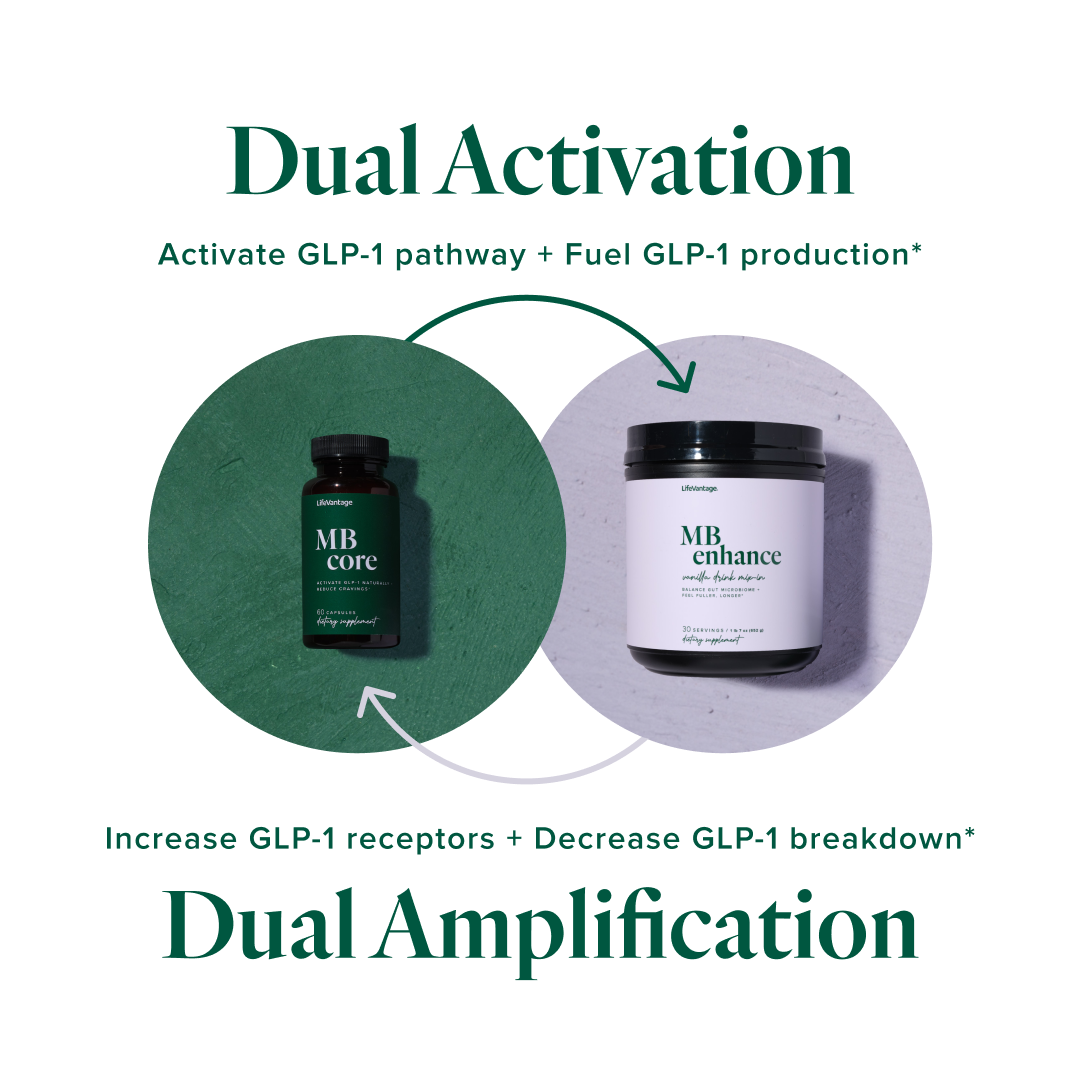
Botanical L-Cell Activation for Natural Satiety*
- ✓ Triggers multiple L-cell receptor pathways simultaneously
- ✓ Supports 200% increase in GLP-1 production from L-cells*
- ✓ Cultivates beneficial gut bacteria (Akkermansia muciniphila)
- ✓ Promotes healthy satiety hormone secretion (GLP-1, PYY)*
- ✓ Enhances natural appetite regulation mechanisms*
* Disclaimer: These statements have not been evaluated by the Food and Drug Administration. This product is not intended to diagnose, treat, cure, or prevent any disease.
* Medical Disclaimer: The content on Nukleo.bio is for informational purposes only and is not intended as medical advice, diagnosis, or treatment. Always consult a qualified healthcare provider before making changes to your health regimen.