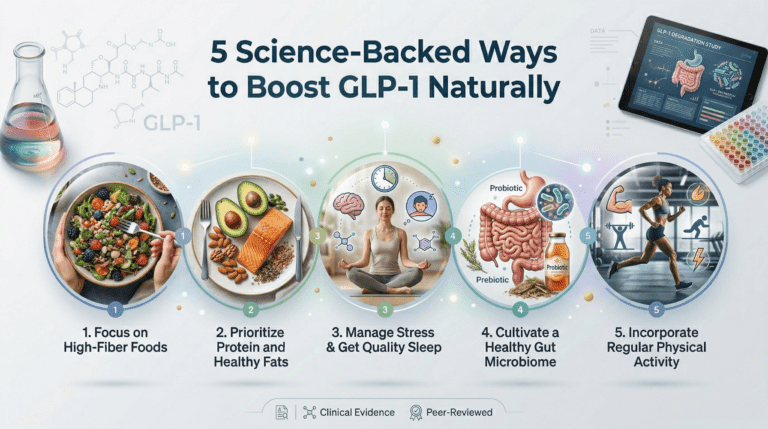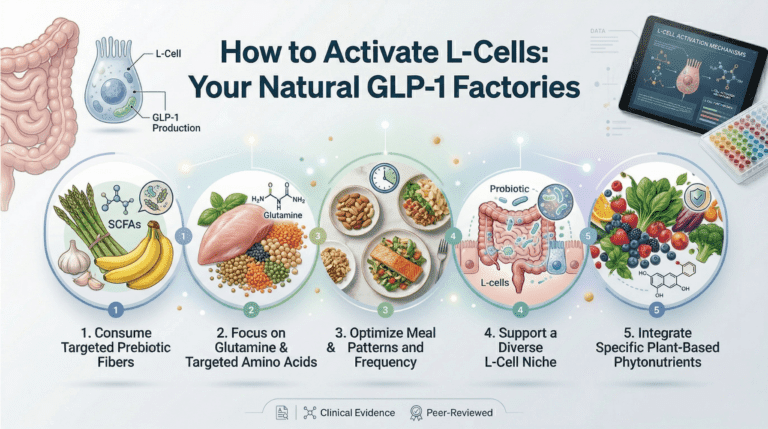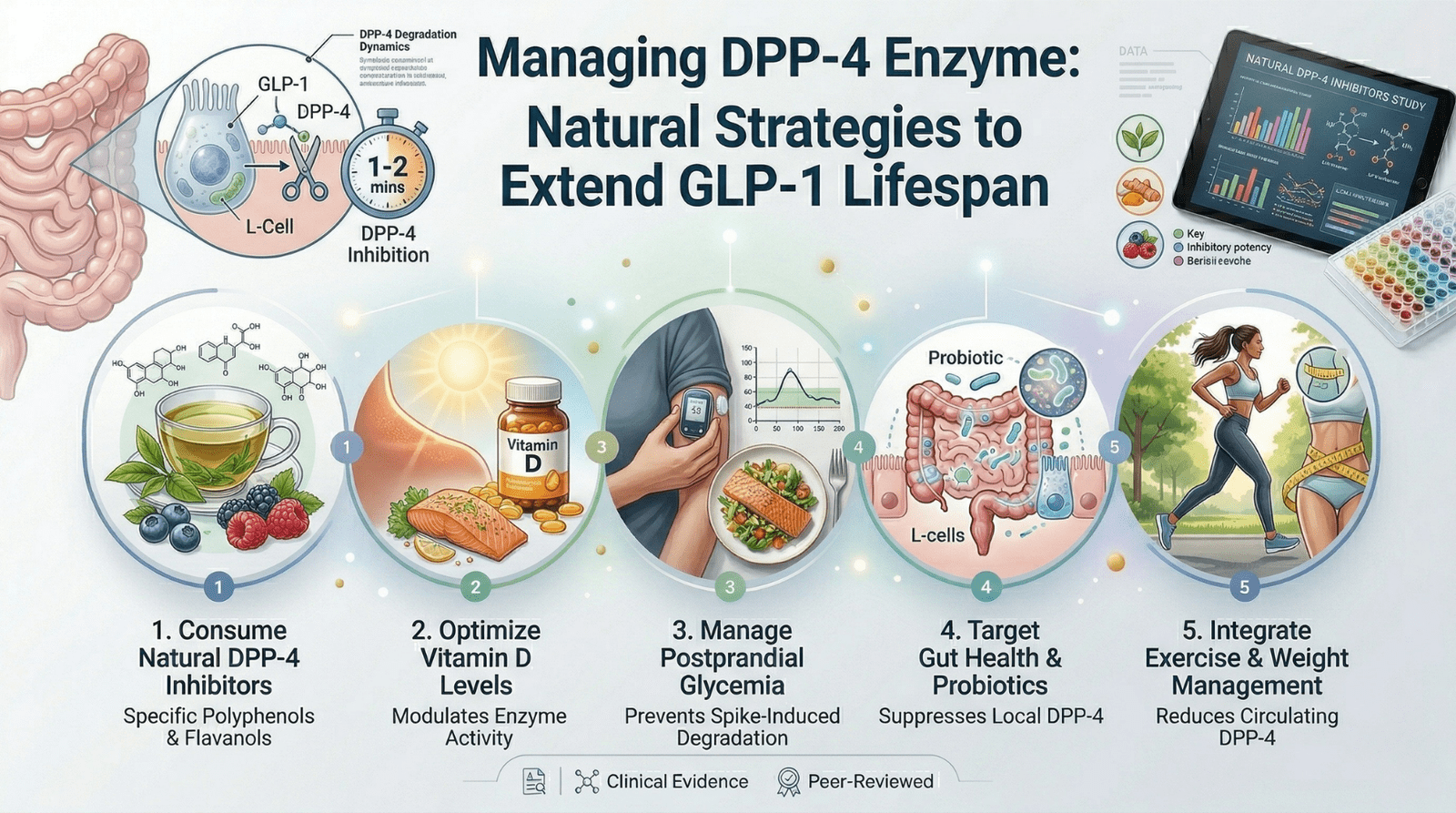
Managing DPP-4 Enzyme: Natural Strategies to Extend GLP-1 Lifespan
Complete GLP-1 Knowledge Series:
→ Natural GLP-1 Activation | L-Cells | DPP-4 Enzyme
→ GLP-1 Signaling | Postprandial Glucose | Metabolic Flexibility
You’ve optimized L-cell activation and increased natural GLP-1 production. But there’s a critical problem: GLP-1 has an extremely short lifespan in your bloodstream—approximately 1-2 minutes before the DPP-4 enzyme breaks it down.
This rapid degradation is why pharmaceutical GLP-1 interventions use DPP-4 inhibitors or create modified GLP-1 molecules resistant to enzymatic breakdown. But what if you could manage DPP-4 activity naturally, extending GLP-1’s effective lifespan without synthetic interventions?
This article explores the science behind DPP-4 enzyme activity and evidence-based strategies to modulate its function through diet, botanicals, and lifestyle factors.
Understanding DPP-4: The GLP-1 Breakdown Enzyme
Dipeptidyl peptidase-4 (DPP-4) is a serine protease enzyme found throughout your body—in blood plasma, on cell surfaces, and in various tissues. While DPP-4 has multiple biological functions, its most metabolically significant role is degrading incretin hormones, particularly GLP-1.
How DPP-4 Works
DPP-4 cleaves two amino acids from the N-terminus of GLP-1, converting the active hormone GLP-1(7-36) into an inactive fragment GLP-1(9-36). This happens remarkably fast:
- Within seconds: DPP-4 begins degrading GLP-1 as soon as it enters circulation
- 1-2 minute half-life: 50% of secreted GLP-1 is inactivated within 2 minutes
- Near-complete degradation: 80-90% of GLP-1 is broken down within 5 minutes
This rapid degradation means that even if your L-cells produce abundant GLP-1, the hormone’s metabolic effects are limited by how quickly DPP-4 eliminates it from circulation.
Key Insight: Managing DPP-4 activity isn’t about completely eliminating the enzyme—it serves other important biological functions. The goal is modest modulation to extend GLP-1’s effective lifespan while maintaining normal DPP-4 function in other systems.
Why DPP-4 Activity Varies Between Individuals
Not everyone’s DPP-4 enzyme functions at the same level. Several factors influence DPP-4 activity:
- Genetics: Polymorphisms in the DPP4 gene affect enzyme expression and activity
- Metabolic status: Insulin resistance correlates with elevated DPP-4 activity
- Inflammation: Chronic inflammation increases DPP-4 expression
- Age: DPP-4 activity tends to increase with aging
- Diet composition: Certain dietary patterns modulate DPP-4 expression
This variability explains why some people maintain better natural GLP-1 levels than others, even with similar L-cell activation strategies.
Strategy 1: Polyphenol-Rich Botanicals
The Science: Certain plant compounds demonstrate DPP-4 inhibitory activity in laboratory studies. While not as potent as pharmaceutical DPP-4 inhibitors, these botanicals show modest but measurable effects on enzyme activity.
How It Works: Polyphenols can bind to the DPP-4 enzyme’s active site or alter its conformational structure, reducing its ability to cleave GLP-1. The effect is dose-dependent and varies significantly between different compounds.
Practical Application
- Green tea (EGCG): Catechins show DPP-4 inhibitory activity in vitro
- Turmeric (curcumin): Demonstrates competitive DPP-4 inhibition
- Berberine: Reduces DPP-4 expression in laboratory studies
- Cinnamon extract: Shows modest DPP-4 inhibitory effects
- Ginger: Contains compounds with DPP-4 inhibitory potential
- Olive leaf extract: Polyphenols demonstrate DPP-4 modulation
- Green tea: 3-4 cups daily, brewed at 160-180°F for 2-3 minutes
- Turmeric: 500-1000mg curcumin with black pepper (enhances absorption)
- Cinnamon: 1-2 teaspoons daily, preferably Ceylon variety
- Berberine: 500mg 2-3x daily (consult healthcare provider first)
Important: Natural DPP-4 inhibition is modest compared to pharmaceuticals. These botanicals support metabolic health through multiple mechanisms beyond DPP-4 inhibition. Don’t expect pharmaceutical-level GLP-1 extension from food-based compounds alone.
Strategy 2: Omega-3 Fatty Acids and DPP-4 Expression
The Science: Omega-3 fatty acids—particularly EPA and DHA—influence DPP-4 gene expression. Research demonstrates that omega-3 supplementation can reduce DPP-4 activity, though the mechanism appears to be through anti-inflammatory pathways rather than direct enzyme inhibition.
How It Works: Chronic inflammation upregulates DPP-4 expression. Omega-3 fatty acids reduce inflammatory signaling, which secondarily decreases DPP-4 gene transcription and enzyme production. This creates a more favorable environment for GLP-1 to exert its metabolic effects.
Practical Application
- Fatty fish: Salmon, mackerel, sardines, anchovies (2-3 servings weekly)
- Fish oil supplements: 1000-2000mg combined EPA+DHA daily
- Algae-based omega-3: 300-600mg DHA daily (vegetarian option)
- Flaxseed/chia: 2-3 tablespoons ground daily (ALA, less effective)
- Take omega-3 supplements with meals containing fat for optimal absorption
- Consistency matters more than timing—daily intake over weeks/months
- Quality matters: choose third-party tested supplements for purity
Strategy 3: Protein Quality and Amino Acid Balance
The Science: Specific amino acids influence DPP-4 activity through various mechanisms. While protein stimulates GLP-1 production (beneficial), certain amino acid patterns may also affect DPP-4 expression.
How It Works: Branched-chain amino acids (BCAAs) and certain other amino acids serve as substrates for metabolic processes that influence DPP-4 gene regulation. The ratio of different amino acids, rather than total protein quantity, appears most relevant for DPP-4 modulation.
Practical Application
- Emphasize complete proteins: Fish, poultry, eggs, Greek yogurt
- Plant protein combinations: Legumes + grains for complete amino acid profile
- Moderate BCAA intake: Avoid excessive leucine-heavy supplements
- Distribute protein evenly: 25-30g per meal rather than one large serving
- Combine protein with fiber to slow amino acid absorption
- Include omega-3 rich protein sources (fatty fish) when possible
- Pair protein with polyphenol-rich vegetables
Strategy 4: Exercise and DPP-4 Activity
The Science: Physical activity influences DPP-4 in complex ways. Acute exercise temporarily increases DPP-4 activity (likely evolutionary adaptation to manage incretin hormones during physical stress), but chronic regular exercise appears to reduce baseline DPP-4 expression.
How It Works: Regular exercise improves insulin sensitivity and reduces chronic inflammation—both factors that decrease DPP-4 expression over time. The acute spike during exercise is temporary and followed by enhanced GLP-1 sensitivity in the post-exercise period.
Practical Application
- Resistance training: 2-3 sessions weekly, improves insulin sensitivity
- Moderate aerobic exercise: 150+ minutes weekly, reduces inflammation
- High-intensity intervals: 1-2 sessions weekly, enhances metabolic flexibility
- Daily movement: Walking, stairs, active living reduces baseline DPP-4
- Post-meal walks: 10-15 minutes after eating enhances GLP-1 effects
- Morning exercise: May optimize DPP-4 patterns throughout the day
- Consistency over intensity: Regular moderate exercise beats sporadic intense sessions
Strategy 5: Sleep Quality and Circadian Rhythm
The Science: DPP-4 expression follows circadian rhythms. Sleep deprivation and circadian disruption increase DPP-4 activity, reducing the effective lifespan of GLP-1 even when production is adequate.
How It Works: Your body’s master clock regulates DPP-4 gene expression through circadian transcription factors. When sleep is insufficient or mistimed, these regulatory mechanisms dysfunction, leading to elevated DPP-4 activity particularly during typical eating hours.
Practical Application
- Consistent sleep schedule: Same bedtime/wake time, including weekends
- 7-9 hours nightly: Inadequate sleep duration increases DPP-4
- Sleep quality: Deep, uninterrupted sleep matters more than just duration
- Light exposure: Bright light morning, dim light evening supports circadian rhythm
- Eat larger meals earlier in the day when DPP-4 activity is naturally lower
- Avoid late-night eating when DPP-4 activity peaks
- Morning protein intake may benefit from lower DPP-4 activity
Strategy 6: Managing Inflammation and Metabolic Stress
The Science: Chronic low-grade inflammation and metabolic stress significantly upregulate DPP-4 expression. Insulin resistance, oxidative stress, and inflammatory cytokines all increase DPP-4 gene transcription.
How It Works: Inflammatory signaling pathways (particularly NF-κB) directly activate the DPP-4 gene promoter. Reducing systemic inflammation through diet and lifestyle decreases this transcriptional activation, lowering baseline DPP-4 levels.
Practical Application
- Reduce processed foods: Minimize refined carbs, trans fats, excessive omega-6
- Emphasize whole foods: Vegetables, fruits, whole grains, lean proteins
- Stress management: Meditation, yoga, deep breathing reduces inflammatory signaling
- Adequate vitamin D: Low vitamin D correlates with elevated DPP-4
- Colorful vegetables: Rich in polyphenols that modulate inflammation
- Berries: High anthocyanin content supports metabolic health
- Nuts and seeds: Provide healthy fats and anti-inflammatory compounds
- Green tea: Dual benefit of DPP-4 inhibition and anti-inflammatory effects
Combining Strategies: A Comprehensive DPP-4 Management Plan
Individual strategies provide modest DPP-4 modulation. The real power comes from combining multiple approaches synergistically.
Morning:
- 7-9 hours quality sleep completed
- Protein-rich breakfast (25-30g) with green tea
- Turmeric supplement or golden milk
- Morning walk or light exercise
Throughout Day:
- Omega-3 rich lunch (salmon, sardines)
- Cinnamon in coffee or tea
- Polyphenol-rich snacks (berries, dark chocolate)
- Movement breaks every 1-2 hours
Evening:
- Earlier dinner (2-3 hours before bed)
- Anti-inflammatory foods emphasized
- Post-dinner walk
- Consistent sleep time
What to Expect: Timeline for DPP-4 Modulation
Unlike pharmaceutical DPP-4 inhibitors that work immediately, natural strategies require time for gene expression changes and metabolic adaptation:
Week 1-2: Acute effects from polyphenols and omega-3s begin. Modest reduction in post-meal DPP-4 activity.
Weeks 3-4: Anti-inflammatory effects accumulate. Sleep optimization begins affecting circadian DPP-4 patterns.
Weeks 5-8: Gene expression changes become apparent. Baseline DPP-4 activity decreases measurably in those with previously elevated levels.
Weeks 9-12: Full adaptation. Enhanced metabolic flexibility and improved GLP-1 effective lifespan.
3+ Months: Sustained DPP-4 modulation becomes the new baseline. Combined with L-cell optimization, natural GLP-1 function significantly improved.
Important Considerations and Limitations
Realistic Expectations: Natural DPP-4 modulation will NOT produce pharmaceutical-level GLP-1 extension. Prescription DPP-4 inhibitors reduce enzyme activity by 70-90%. Natural strategies might achieve 10-20% modulation at best.
Individual Variation: People with genetically high DPP-4 activity may see more benefit from these strategies than those with naturally low enzyme activity.
Medical Conditions: If you have diabetes or take medications affecting blood sugar, consult your healthcare provider before implementing DPP-4-modulating strategies, as they may affect your medication needs.
Supplement Interactions: Berberine in particular can interact with various medications. Always consult a healthcare provider before adding new supplements, especially if you take prescription drugs.
The Bottom Line
Managing DPP-4 enzyme activity naturally represents the “other side” of the GLP-1 optimization equation. While activating L-cells increases GLP-1 production, modulating DPP-4 extends the hormone’s effective lifespan.
The strategies outlined here—polyphenol-rich botanicals, omega-3 fatty acids, exercise, sleep optimization, and anti-inflammatory nutrition—work synergistically to reduce DPP-4 expression and activity through multiple mechanisms.
This isn’t about replacing pharmaceutical interventions. It’s about understanding how your body regulates GLP-1 degradation and using evidence-based strategies to support optimal metabolic hormone function naturally.
Combined with GLP-1 production strategies and L-cell activation, DPP-4 management completes a comprehensive approach to natural metabolic hormone optimization.
Explore the Complete GLP-1 Series:
→ Natural GLP-1 Activation | L-Cells | DPP-4 Enzyme
→ GLP-1 Signaling | Postprandial Glucose | Metabolic Flexibility
Research Citations:
- PMID: 33820962 (Université de Louvain – GLP-1 & Metabolic Pathways)
* Disclaimer: These statements have not been evaluated by the Food and Drug Administration. The information provided is not intended to diagnose, treat, cure, or prevent any disease.
* Medical Disclaimer: The content on Nukleo.bio is for informational purposes only and is not intended as medical advice, diagnosis, or treatment. Always consult with a qualified healthcare provider before making changes to your diet, supplements, or health regimen, especially if you take prescription drugs or have medical conditions.