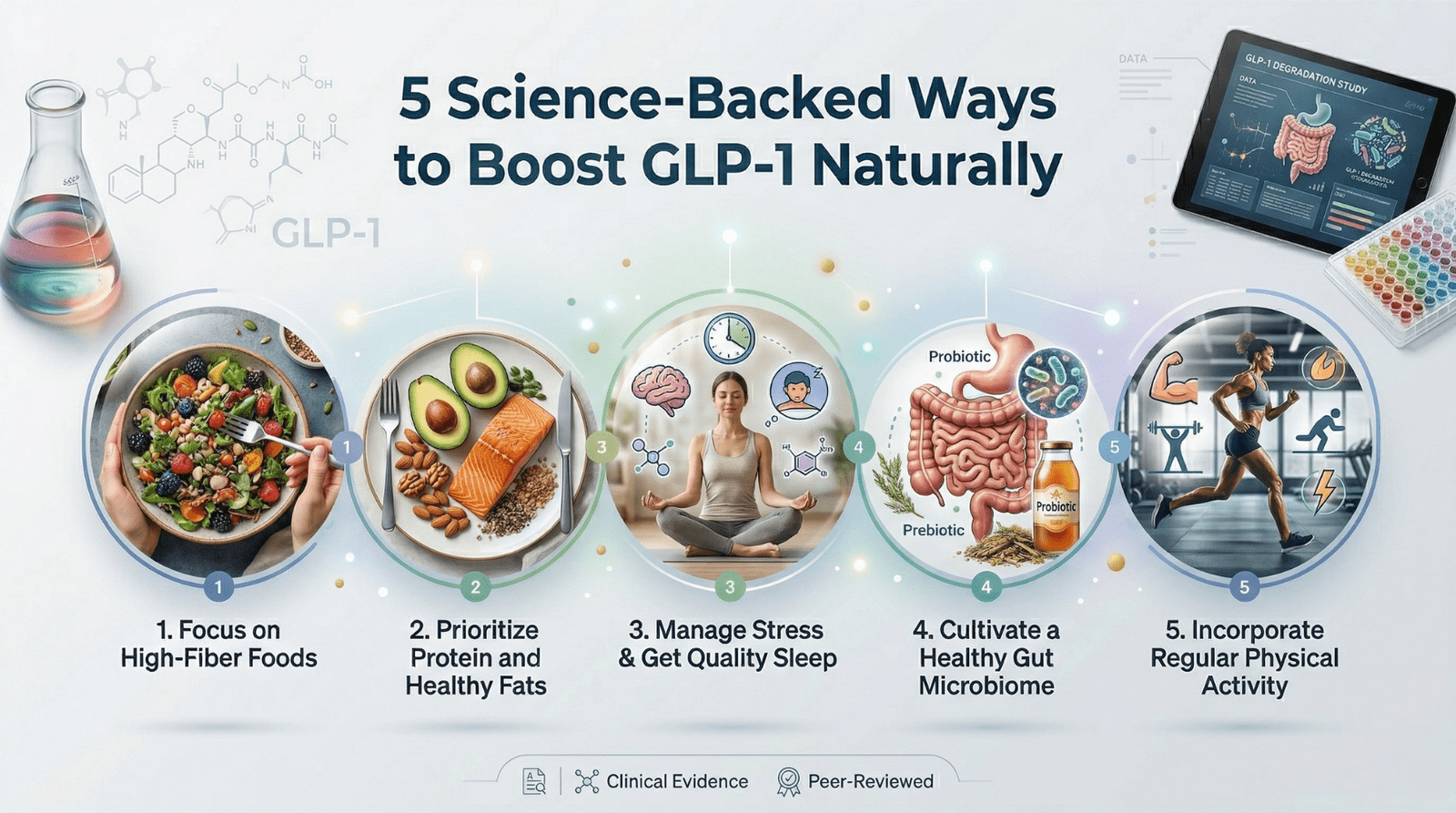
5 Science-Backed Ways to Boost GLP-1 Naturally
Complete GLP-1 Knowledge Series:
→ Natural GLP-1 Activation | L-Cells | DPP-4 Enzyme
→ GLP-1 Signaling | Postprandial Glucose | Metabolic Flexibility
You’ve likely heard about GLP-1—the hormone making headlines for its role in appetite regulation and metabolic health. But what if you could boost GLP-1 naturally, without injections or synthetic interventions?
Research from universities like Université de Louvain reveals that your body already possesses the biological machinery to produce GLP-1 efficiently. The challenge isn’t creating more GLP-1—it’s understanding how to activate the cells that produce it and protect the hormone from rapid degradation.
This article explores five research-backed strategies to naturally boost GLP-1 levels, each supported by peer-reviewed studies and clinical evidence.
Understanding GLP-1: The Metabolic Messenger
Before diving into strategies, it’s essential to understand what GLP-1 actually does.
GLP-1 (glucagon-like peptide-1) is a hormone produced by specialized cells in your intestine called L-cells. When you eat, these cells secrete GLP-1 into your bloodstream, where it performs several critical functions:
- Regulates appetite by signaling satiety to your brain
- Slows gastric emptying to extend feelings of fullness
- Supports healthy blood sugar levels already within normal range
- Enhances insulin secretion in response to meals
The problem? GLP-1 has an extremely short half-life. The DPP-4 enzyme breaks it down within minutes of secretion, which is why maintaining elevated GLP-1 levels naturally requires both increasing production and reducing degradation.
1. Optimize Dietary Fiber Intake
The Science: Research demonstrates that dietary fiber directly stimulates L-cells to produce GLP-1. Université de Louvain researchers found that fiber fermentation in the lower intestine creates short-chain fatty acids (SCFAs) that trigger GLP-1 secretion (PMID: 33820962).
How It Works: When gut bacteria ferment fiber, they produce SCFAs like butyrate, propionate, and acetate. These compounds interact with receptors on L-cells, signaling them to release GLP-1.
Practical Application
- Oats and oat bran (beta-glucan)
- Legumes (beans, lentils, chickpeas)
- Flaxseeds and chia seeds
- Apples and pears (pectin)
- Cooked and cooled potatoes or rice
- Green bananas
- Legumes
Target Intake: Aim for 25-35 grams of total fiber daily, with at least 10-15 grams from soluble sources.
Pro Tip: Gradually increase fiber intake over 2-3 weeks to allow your gut microbiome to adapt, preventing digestive discomfort.
2. Support Akkermansia Muciniphila Growth
The Science: Akkermansia muciniphila is a beneficial gut bacterium that strengthens the intestinal barrier and directly influences GLP-1 production. Research from Université de Louvain demonstrated that Akkermansia interacts with L-cells to enhance GLP-1 secretion (PMID: 33820962).
How It Works: Akkermansia feeds on the mucin layer of your intestinal lining. This process not only maintains gut barrier integrity but also creates metabolic byproducts that stimulate L-cell activity.
Practical Application
- Polyphenol-rich foods: Pomegranates, cranberries, grapes, green tea
- Omega-3 fatty acids: Fatty fish, walnuts, flaxseeds
- Prebiotic fibers: Chicory root, Jerusalem artichokes, garlic, onions
- Intermittent fasting: Research suggests fasting periods may increase Akkermansia populations
- Adequate sleep: Poor sleep quality correlates with reduced Akkermansia levels
- Exercise: Regular physical activity supports beneficial gut bacteria diversity
What to Avoid: Excessive artificial sweeteners and emulsifiers in processed foods may negatively impact Akkermansia populations.
3. Activate L-Cells with Protein
The Science: Protein is one of the most potent natural stimulators of GLP-1 secretion. L-cells contain protein sensors that detect amino acids in the intestinal lumen and respond by releasing GLP-1.
How It Works: When protein reaches the small intestine, L-cells detect specific amino acids through specialized receptors. This triggers a cascade of cellular signals resulting in GLP-1 secretion. Higher protein intake also slows gastric emptying, extending the duration of GLP-1 release.
Practical Application
- Breakfast: 25-30 grams (highest GLP-1 response)
- Lunch: 20-25 grams
- Dinner: 25-30 grams
- Eggs (6-7 grams per egg)
- Greek yogurt (15-20 grams per cup)
- Chicken breast (25 grams per 3 oz)
- Fish (salmon, cod, tuna: 20-25 grams per 3 oz)
- Legumes (15-18 grams per cup)
- Whey protein (20-25 grams per scoop)
Strategic Timing: Consuming protein early in meals triggers earlier GLP-1 release, which may enhance satiety throughout the meal and reduce overall calorie intake.
4. Incorporate Natural DPP-4 Inhibitors
The Science: While boosting GLP-1 production is important, protecting it from rapid degradation is equally crucial. The DPP-4 enzyme breaks down GLP-1 within 2-3 minutes of secretion. Certain botanical compounds demonstrate DPP-4 inhibitory activity in research studies.
How It Works: DPP-4 inhibitors slow the enzymatic breakdown of GLP-1, effectively extending its half-life in circulation. This allows GLP-1 to exert its metabolic effects for longer periods.
Practical Application
- Green tea: Contains catechins with DPP-4 inhibitory properties
- Turmeric (curcumin): Demonstrates DPP-4 inhibition in laboratory studies
- Berberine-rich plants: Goldenseal, barberry (consult healthcare provider)
- Cinnamon: Shows modest DPP-4 inhibitory activity
- Green tea: Brew at 160-180°F for 2-3 minutes to maximize catechin content
- Turmeric: Combine with black pepper (piperine) to enhance absorption
- Cinnamon: Use Ceylon cinnamon; add to morning oatmeal or coffee
Important Note: Natural DPP-4 inhibition is modest compared to pharmaceutical interventions. These foods support, but do not replace, comprehensive metabolic health strategies.
5. Leverage Meal Timing and Composition
The Science: The timing, size, and macronutrient composition of meals significantly influence GLP-1 secretion patterns. Research demonstrates that meal structure affects postprandial GLP-1 response.
How It Works: L-cells respond not just to nutrients, but to the pattern and sequence in which they arrive. Larger meals trigger more GLP-1 release, but frequent smaller meals may sustain elevated levels throughout the day. The order in which you consume macronutrients also matters.
Practical Application
- Start with vegetables and protein (stimulates early GLP-1 release)
- Follow with complex carbohydrates (sustains GLP-1 secretion)
- End with fruit or small dessert (if desired)
- Protein: 25-30% of calories
- Fiber-rich carbohydrates: 40-45% of calories
- Healthy fats: 25-30% of calories
- Breakfast: Greek yogurt with berries, ground flaxseed, and almonds
- Lunch: Grilled salmon over mixed greens with quinoa and olive oil dressing
- Dinner: Chicken breast with roasted vegetables and sweet potato
This macronutrient distribution provides the protein and fiber necessary for GLP-1 stimulation while supporting stable blood sugar levels already within normal range.
Putting It All Together: A Practical GLP-1 Optimization Plan
Implementing all five strategies simultaneously may feel overwhelming. Here’s a phased approach:
- Increase fiber intake gradually
- Add protein to breakfast
- Incorporate green tea or turmeric
- Add polyphenol-rich foods daily
- Include fermented foods (yogurt, kefir)
- Maintain consistent meal timing
- Experiment with meal sequencing
- Fine-tune protein distribution
- Monitor hunger and satiety signals
- Continue practices that feel sustainable
- Adjust based on individual response
- Focus on long-term consistency over perfection
What to Expect
Timeline for Changes:
Days 1-7: Increased fiber may initially enhance feelings of fullness. Digestive adaptation occurs.
Weeks 2-4: Gut microbiome begins to shift. Akkermansia populations may increase. Satiety signals improve.
Weeks 4-8: L-cell function optimizes. Natural GLP-1 production increases. Appetite regulation becomes more apparent.
Weeks 8-12+: Sustained metabolic improvements. Enhanced metabolic flexibility. Stable blood sugar levels already within normal range.
Important Considerations
Individual Variation: Response to these strategies varies based on genetics, current gut health, metabolic status, and lifestyle factors. What works optimally for one person may require adjustment for another.
Medical Supervision: If you have diabetes, metabolic disorders, or take medications affecting blood sugar or appetite, consult your healthcare provider before making significant dietary changes.
Complementary Lifestyle Factors: Sleep quality, stress management, and regular physical activity all influence GLP-1 production and sensitivity. These strategies work best as part of a comprehensive health approach.
The Bottom Line
Boosting GLP-1 naturally isn’t about finding a single “magic bullet” food or supplement. It’s about understanding the biological systems that produce and regulate this hormone, then supporting them through evidence-based dietary and lifestyle strategies.
Research from Université de Louvain and other institutions demonstrates that dietary fiber, gut microbiome health (particularly Akkermansia), adequate protein intake, natural DPP-4 inhibition, and strategic meal timing all contribute to optimized GLP-1 levels (
Similar Posts
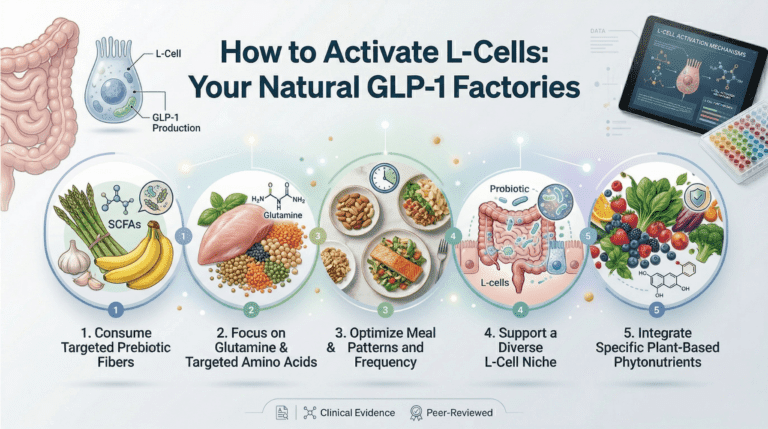
How to Activate L-Cells: Your Natural GLP-1 Factories
Complete GLP-1 Knowledge Series: → Natural GLP-1 Activation | L-Cells | DPP-4 Enzyme → GLP-1 Signaling | Postprandial Glucose | Metabolic Flexibility Your intestine contains specialized cells that function as natural hormone factories. These cells, called L-cells, produce GLP-1—the hormone responsible for appetite regulation, satiety signaling, and metabolic balance. Understanding how to activate L-cells naturally…
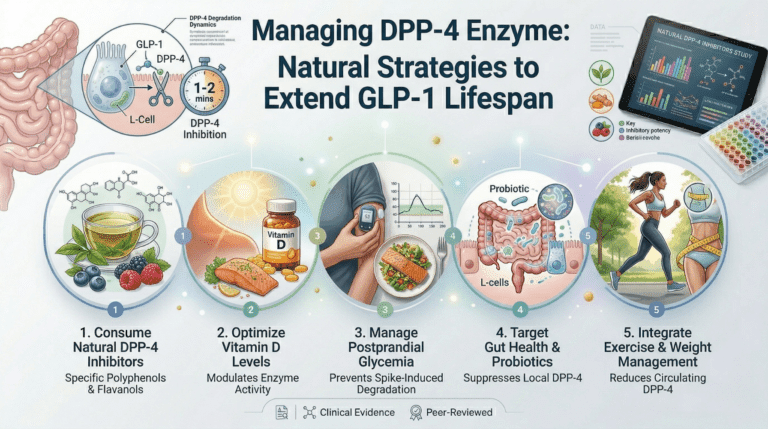
Managing DPP-4 Enzyme: Natural Strategies to Extend GLP-1 Lifespan
Complete GLP-1 Knowledge Series: → Natural GLP-1 Activation | L-Cells | DPP-4 Enzyme → GLP-1 Signaling | Postprandial Glucose | Metabolic Flexibility You’ve optimized L-cell activation and increased natural GLP-1 production. But there’s a critical problem: GLP-1 has an extremely short lifespan in your bloodstream—approximately 1-2 minutes before the DPP-4 enzyme breaks it down. This…